

Introduction
Cricket has produced many memorable rivalries, but the competition between India and South Africa holds a special place in international cricket. Both teams have developed strong cricketing traditions, produced legendary players, and delivered unforgettable performances across Test matches, One Day Internationals (ODIs), and Twenty20 Internationals (T20Is). Their contests are known for competitive bowling, powerful batting, outstanding fielding, and dramatic finishes.
The India national cricket team vs South Africa national cricket team timeline represents a fascinating journey through different generations of cricket. From their first meeting after South Africa returned to international cricket to modern-day international tournaments, both sides have experienced victories, defeats, rebuilding periods, and remarkable individual achievements. Their rivalry has also helped strengthen cricketing connections between the two nations.
This article explores the important moments, historical developments, major series, famous players, and unforgettable matches that have shaped this international cricket rivalry.
1. The Beginning of the India-South Africa Cricket Rivalry
India and South Africa first played an official Test series against each other in 1992. This was an important moment because South Africa had recently returned to international cricket after years of sporting isolation during apartheid. Their return created opportunities for new international cricket contests, and India became one of their early opponents.
The first Test match between the countries began in November 1992 in Durban. The series introduced Indian players to South Africa’s challenging playing conditions, including fast pitches and additional bounce. South Africa had a strong bowling attack, while India relied on experienced batters and technically skilled players. The four-match Test series ended with South Africa winning 1–0.
This opening chapter established the foundation for a rivalry that would continue to grow across formats. It also gave both teams valuable experience against different styles of international cricket.
2. The Early ODI Encounters and Growing Competition
After their return to international cricket, South Africa quickly became a competitive opponent in the ODI format. India and South Africa played several matches during the 1990s, including bilateral contests and international tournaments. These games demonstrated that both teams could compete strongly with different combinations of batting and bowling talent.
India had established players such as Sachin Tendulkar, Mohammad Azharuddin, and Anil Kumble, while South Africa featured talented cricketers including Hansie Cronje, Allan Donald, and Jonty Rhodes. The contrast between India’s technically strong batting and South Africa’s aggressive fielding and fast bowling made their encounters particularly interesting.
As the decade progressed, the rivalry became more competitive. South Africa developed a reputation for performing strongly at home, while India continued building its international reputation through talented young players and experienced campaigners.
3. The 1996–97 Series: India Makes a Strong Comeback
The 1996–97 season was one of the most important periods in the development of this rivalry. When South Africa toured India, the home team delivered an impressive performance in the three-match Test series. India won the series 2–1, demonstrating its ability to compete against a strong South African side.
The series included several memorable performances from Indian players. The victory in Ahmedabad and the commanding win in Kanpur showed India’s strength on home pitches. However, South Africa also produced a major victory in Kolkata, proving that the contest was far from one-sided. Later, when India travelled to South Africa during the same season, the home team responded by winning the Test series 2–0. These back-to-back encounters established the competitive nature of the rivalry.
4. The 1999–2000 and Early 2000s: South Africa’s Dominance
South Africa continued to perform strongly during the late 1990s and early 2000s. During the 1999–2000 tour of India, South Africa won both Test matches, including a victory by an innings and 71 runs in Bengaluru. Its disciplined bowling and consistent batting created difficulties for the Indian team.
The 2001–02 tour of South Africa also provided challenging conditions for India. South Africa won the first Test in Bloemfontein, while the second match in Port Elizabeth ended in a draw. Players such as Shaun Pollock, Jacques Kallis, Mark Boucher, and Sachin Tendulkar became important figures in this period. Their performances helped make the rivalry more exciting and competitive.
5. India’s Progress During the 2004–05 and 2006–07 Seasons
India’s performances improved during the middle of the 2000s. When South Africa visited India in 2004–05, the two-match Test series ended with India winning 1–0. The Kolkata Test was particularly important because India secured an eight-wicket victory after a competitive contest.
However, the 2006–07 tour of South Africa presented another difficult challenge. India started the series with an impressive victory in Johannesburg, winning by 123 runs. This result was historically significant because it gave India its first Test victory on South African soil. South Africa recovered by winning the next two matches in Durban and Cape Town, taking the series 2–1.
This period demonstrated how important home conditions were in the rivalry. South Africa’s pace-friendly surfaces tested Indian batters, while Indian pitches challenged South African players with spin and slower conditions.
6. The 2007–08 and 2009–10 Series: Competitive Cricket
The 2007–08 series in India was another closely contested chapter. The teams played three Test matches, with India and South Africa each winning one match and the remaining game ending in a draw. The series demonstrated the growing balance between the two teams.
The 2009–10 season brought another exciting contest. The Test series in India finished 1–1, with South Africa winning the opening Test in Nagpur and India responding with a dominant innings victory in Kolkata. During the same period, the ODI matches also attracted considerable attention.
One of the biggest highlights came in February 2010 when India scored 401 runs for three wickets against South Africa in Gwalior. Sachin Tendulkar made history by becoming the first male cricketer to score a double century in men’s ODI cricket. His unbeaten 200 transformed the match into one of the most memorable moments in the rivalry.
7. The 2010–11 and 2013–14 Test Series
The 2010–11 Test series in South Africa provided another close contest. Both teams demonstrated excellent bowling and batting skills, and the three-match series finished 1–1 with one match drawn. India’s ability to compete in difficult overseas conditions showed the team’s growing confidence.
The 2013–14 tour was particularly important because South Africa had established itself as one of the strongest Test teams in the world. India played two Test matches during the tour. South Africa won the first match, while the second ended in a draw. Although India did not win the series, the team produced several determined performances against a formidable opponent.
During this period, players such as Virat Kohli, AB de Villiers, Dale Steyn, MS Dhoni, and Hashim Amla became major attractions. Their individual skills and competitive attitudes added another dimension to the rivalry.
8. The 2015–16 Freedom Trophy: India’s Historic Home Performance
The 2015–16 Test series was a major turning point in the modern history of this rivalry. South Africa toured India for four Test matches, competing for the Freedom Trophy. India delivered an outstanding performance and won the series 3–0.
Indian spinners played a crucial role throughout the series. Ravichandran Ashwin and Ravindra Jadeja troubled South African batters with their accuracy, variations, and control. The Indian batting lineup also contributed important runs to establish match-winning positions.
The series showed how effectively India could use home conditions against a highly respected international opponent. It also strengthened India’s reputation as a dominant Test team on its own grounds. The Freedom Trophy became an important symbol of the cricketing relationship between the two countries.
9. The 2017–18 Tour: South Africa Defends Its Home Advantage
The 2017–18 tour of South Africa was another exciting chapter. India arrived with a strong team featuring Virat Kohli, Rohit Sharma, Cheteshwar Pujara, and other experienced players. South Africa, meanwhile, had a powerful bowling attack featuring Kagiso Rabada, Vernon Philander, and Morne Morkel.
South Africa won the first two Test matches and secured the series 2–1, although India finished strongly by winning the third Test in Johannesburg. The Johannesburg victory was particularly memorable because Indian fast bowlers performed exceptionally well on a challenging surface.
India also competed in the ODI series and achieved a significant result by winning it 5–1. This demonstrated that the team could adapt to South African conditions more successfully in limited-overs cricket.
10. The 2019–20 Series: India’s Dominance at Home
When South Africa toured India in 2019, the hosts delivered another outstanding Test performance. India won all three matches and completed a 3–0 series victory. The team displayed impressive batting depth and a strong bowling combination.
Rohit Sharma produced remarkable performances with the bat, while Virat Kohli, Mayank Agarwal, and other players contributed important runs. India’s pace attack also played a major role, showing that the team was no longer dependent only on spin bowling when playing at home.
This series reflected the development of Indian cricket across different departments. Strong opening partnerships, effective middle-order batting, and disciplined fast bowling helped India control the matches.
11. The 2021–22 and 2023–24 Tours: A New Generation Takes Over
The 2021–22 tour of South Africa was a competitive three-match Test series. India won the opening Test in Centurion, creating expectations of a historic series victory. However, South Africa responded strongly and won the next two matches in Johannesburg and Cape Town to take the series 2–1.
The 2023–24 tour provided another memorable contest. The two-match Test series finished 1–1. India won the opening Test in Centurion, while South Africa secured victory in Cape Town. The second Test became especially notable because it was completed in just two days, highlighting the impact of fast bowling and challenging batting conditions.
These matches demonstrated that the rivalry continued to remain competitive even as established stars gradually shared the spotlight with younger players.
12. The 2025–26 Chapter: Another Important Milestone
The 2025–26 period added another important chapter to the India national cricket team vs South Africa national cricket team timeline. South Africa toured India for a two-match Test series and achieved a 2–0 victory. The result demonstrated South Africa’s ability to perform successfully in Indian conditions and added another achievement to its Test cricket history.
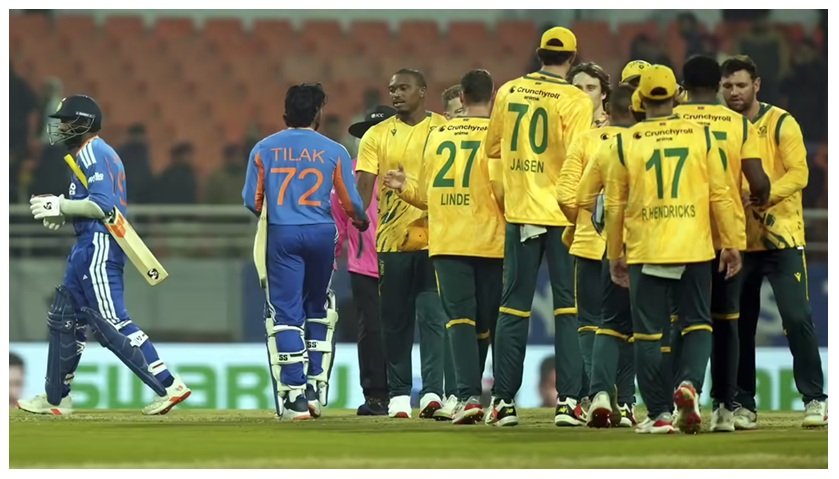
The two teams also continued their rivalry in limited-overs cricket. Their encounters in international tournaments attracted attention from cricket supporters because both sides had talented players capable of changing a match within a few overs. The 2026 ICC Men’s T20 World Cup also featured a meeting between India and South Africa, with South Africa winning by 76 runs in Ahmedabad.
These developments showed that the rivalry remains relevant across generations and formats.
13. India vs South Africa Across Different Cricket Formats
The rivalry has developed differently in each international format. Test cricket focuses on patience, technique, bowling consistency, and the ability to perform over five days. India has traditionally been particularly competitive at home, while South Africa has enjoyed considerable success on its own pitches.
In ODIs, both teams have produced outstanding batting performances and exciting finishes. Their matches have featured major individual milestones, impressive partnerships, and memorable tournament encounters. Sachin Tendulkar’s historic double century in 2010 remains one of the most celebrated ODI achievements in their shared history.
T20Is have introduced a faster and more aggressive dimension to the competition. Players such as Suryakumar Yadav, Hardik Pandya, David Miller, Quinton de Kock, and Heinrich Klaasen have helped make the shorter format entertaining. Their performances demonstrate how the rivalry continues to evolve with modern cricket.
14. Legendary Players Who Shaped the Rivalry
Several legendary cricketers have played important roles in making India-South Africa matches memorable.
Famous Indian players:
-
Sachin Tendulkar – Known for his outstanding batting and historic achievements.
-
Rahul Dravid – Recognised for his patience and technical ability.
-
Virat Kohli – Famous for his aggressive batting and competitive leadership.
-
MS Dhoni – Remembered for his wicketkeeping and captaincy.
-
Rohit Sharma – Known for his powerful batting and leadership.
-
Jasprit Bumrah – Recognised for his exceptional fast bowling.
Famous South African players:
-
Jacques Kallis – One of the greatest all-rounders in cricket.
-
AB de Villiers – Celebrated for his innovative batting.
-
Dale Steyn – Known for his pace and swing bowling.
-
Shaun Pollock – A respected all-rounder and captain.
-
Hashim Amla – Recognised for his elegant batting.
-
Kagiso Rabada – An important fast bowler of the modern era.
These players have contributed to the competitive spirit of the rivalry and created memories for cricket fans worldwide.
15. Important Milestones in the India-South Africa Timeline
The following table summarises some major moments in the history of these two teams.
| Year | Important milestone |
|---|---|
| 1991 | South Africa returned to international cricket |
| 1992 | First Test series between the teams |
| 1996–97 | India won its home Test series 2–1 |
| 2006–07 | India recorded its first Test victory in South Africa |
| 2010 | Tendulkar scored the first men’s ODI double century |
| 2015–16 | India won the Freedom Trophy 3–0 |
| 2017–18 | South Africa won the Test series 2–1 |
| 2019–20 | India won the home Test series 3–0 |
| 2021–22 | South Africa won the Test series 2–1 |
| 2023–24 | Test series finished 1–1 |
| 2025–26 | South Africa won the two-match Test series 2–0 |
16. Why the India-South Africa Rivalry Is Special
The India national cricket team vs South Africa national cricket team timeline is special because it represents competition between two teams with different cricketing strengths and traditions. India has developed a reputation for producing technically gifted batters, world-class spinners, and increasingly powerful fast bowlers. South Africa has traditionally been associated with fast bowling, athletic fielding, and disciplined batting.
Another important feature is the quality of cricket played in different conditions. Indian pitches can provide assistance to spin bowlers, while South African grounds often offer bounce and movement for fast bowlers. Players must adjust their techniques and strategies depending on the location.
The rivalry also has a strong international following. Cricket supporters from both countries closely follow bilateral series, ICC tournaments, and individual performances. Every new contest creates opportunities for emerging players to establish themselves and experienced players to add another achievement to their careers.
Conclusion
The India-South Africa cricket rivalry has developed into one of the most interesting contests in international cricket. Starting with their early encounters in the 1990s, both teams have experienced historic victories, challenging defeats, individual records, and unforgettable performances.
The India national cricket team vs South Africa national cricket team timeline highlights the progress of international cricket across Test matches, ODIs, and T20Is. From Sachin Tendulkar’s extraordinary batting achievements to modern performances from Virat Kohli, Jasprit Bumrah, Kagiso Rabada, and other stars, the rivalry has continued to produce exciting cricket.
As new generations of players emerge, supporters can look forward to more competitive series, remarkable records, and memorable international matches. The history of these two teams demonstrates that their cricketing rivalry remains an important part of the international game.

