

The west indies cricket team vs new zealand national cricket team match scorecard is a useful resource for cricket fans who want to understand batting performances, bowling figures, partnerships, wickets, and match results between these two international sides. West Indies are known for their aggressive batting and ability to change a match quickly, while New Zealand have built a reputation for disciplined bowling, adaptable batting, and strong team coordination.
Their recent encounters have produced competitive cricket across formats. In the five-match ODI series played in the West Indies in July 2026, both teams secured victories, including close finishes that demonstrated the importance of partnerships and composure under pressure. The series featured high-scoring chases as well as matches in which bowlers controlled the scoring rate. Examining the scorecard helps readers understand how each team approached different match situations and which performances influenced the final result.
This article explains how to read the scorecard, reviews the latest five-match ODI series, and highlights the major factors that determine the outcome of a West Indies versus New Zealand contest.
Understanding the Match Scorecard
A cricket scorecard provides a structured summary of a match, including each team’s total runs, wickets lost, overs faced, individual batting figures, bowling statistics, and the final result. It allows readers to go beyond the headline score and identify the moments that shaped the contest.
When reviewing the west indies cricket team vs new zealand national cricket team match scorecard, start with the innings totals. In a one-day international, each side can normally face up to 50 overs. The team batting first attempts to establish a competitive target, while the chasing team must balance scoring quickly with protecting its wickets.
Individual batting figures reveal which players made the most significant contributions. Runs scored, balls faced, boundaries, sixes, and strike rate show whether a batter built a steady innings or accelerated during crucial overs. Bowling figures explain how effectively the opposition restricted the scoring, with wickets, runs conceded, overs bowled, and economy rate providing important context.
A scorecard also records dismissals and extras. These details can reveal whether a team lost wickets through attacking shots, accurate bowling, or avoidable mistakes. By examining all these figures together, readers can develop a clearer understanding of the match rather than relying solely on the winning team’s name.
West Indies vs New Zealand ODI Series 2026
The July 2026 ODI series in the West Indies offered several exciting contests. The five matches included two victories for the home side and three for New Zealand, with the final game providing a close finish. The results illustrate how small differences in batting partnerships, bowling execution, and finishing ability can decide international cricket matches.
The first ODI saw West Indies chase down New Zealand’s total of 267, finishing at 268/3. New Zealand responded strongly in the second match, restricting West Indies to 138 before reaching 141/5. The third ODI followed a similar pattern, with West Indies dismissed for 140 and New Zealand completing the chase at 141/4.
New Zealand then won a narrow fourth ODI by one wicket after West Indies scored 188. In the fifth match, West Indies bounced back by chasing 269, finishing at 269/8 in 47.3 overs. This sequence made the series a useful example of how teams adapt their strategies after wins and defeats.
Match Scorecard Summary of the 2026 ODI Series
The following table summarizes all five matches from the series and highlights the final scores and results. It provides a quick overview for readers who want to compare the performances of both teams without examining every individual delivery.
|
Match |
West Indies score |
New Zealand score |
Result |
|---|---|---|---|
|
1st ODI |
268/3 (48.5 ov) |
267 all out (49.5 ov) |
West Indies won by 7 wickets |
|
2nd ODI |
138 all out (36 ov) |
141/5 (32.4 ov) |
New Zealand won by 5 wickets |
|
3rd ODI |
140 all out (37.1 ov) |
141/4 (39.3 ov) |
New Zealand won by 6 wickets |
|
4th ODI |
188 all out (44.4 ov) |
189/9 (44.1 ov) |
New Zealand won by 1 wicket |
|
5th ODI |
269/8 (47.3 ov) |
268/9 (50 ov) |
West Indies won by 2 wickets |
The series demonstrates how dramatically the balance of a cricket match can change. West Indies displayed strong chasing ability in the opening and final matches, while New Zealand produced three consecutive wins through effective bowling and successful run chases. The fourth ODI was particularly close, as New Zealand reached the target with only one wicket remaining. These results also show why a scorecard should be studied alongside match conditions, wickets lost, and the stage of the innings.
Detailed Analysis of the Fifth ODI
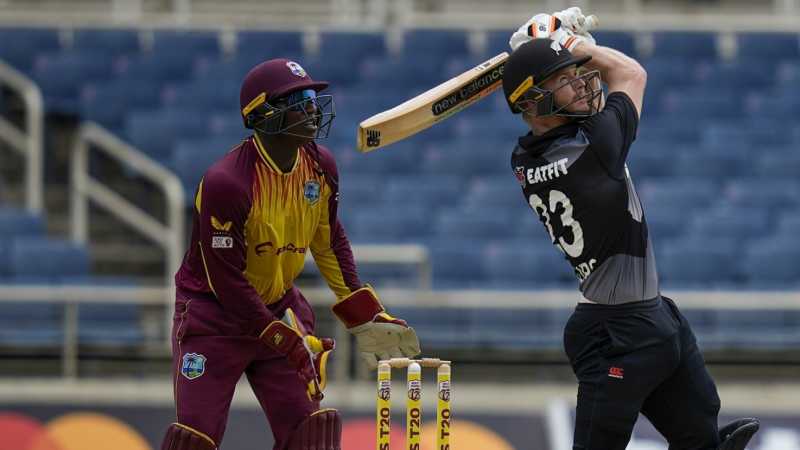
The fifth ODI, played at Kensington Oval in Bridgetown on July 21, 2026, was one of the most exciting matches of the series. New Zealand batted first and scored 268/9 in 50 overs. West Indies replied with 269/8 in 47.3 overs, securing a two-wicket victory with 15 balls remaining. Shimron Hetmyer was named Player of the Match for his innings of 69 from 64 balls.
New Zealand’s batting effort included contributions from several players. Nick Kelly scored 64 from 80 balls, Will Young added 56 from 63 deliveries, and Tom Latham contributed 69 from 71 balls. Nathan Smith added 50 from 15 balls, providing late momentum to the innings. These performances helped New Zealand reach a competitive total despite losing wickets at regular intervals.
West Indies needed a balanced approach in response. Ackeem Auguste scored 34 from 24 balls, while Hetmyer’s important contribution helped the team remain competitive during the chase. The home side eventually crossed the target after losing eight wickets, demonstrating the value of maintaining a scoring rate while preserving enough batting resources to finish the innings.
The match also highlighted the importance of bowling changes and fielding. New Zealand’s bowlers created pressure by taking wickets at key moments, but West Indies found a way to keep the required run rate manageable. The result showed that even a total close to 270 does not guarantee victory when the chasing side has players capable of building partnerships and accelerating at the right time.
Top Batting Performances in the Series
Batting statistics help identify the players who contributed most consistently throughout a series. According to the official series statistics, Keacy Carty of West Indies finished as the leading run-scorer with 194 runs. Will Young led New Zealand’s run-scoring with 176, while Tom Latham accumulated 167. Ackeem Auguste scored 149 runs, and Shai Hope contributed 143.
These numbers reflect different approaches to batting. Carty’s consistency was important for West Indies because his contributions helped establish innings and gave the middle order a platform. Young and Latham provided valuable runs for New Zealand, helping their team build totals and chase targets. Auguste also made a useful contribution across the series, demonstrating the importance of support from younger batters.
When studying batting statistics, readers should consider more than the total runs scored. Balls faced, strike rate, boundaries, and the match situation all help explain a player’s influence. A batter who scores 40 runs quickly may change a chase, while someone who makes 60 runs over a longer period may stabilize an innings after early wickets. Both contributions can be valuable, depending on the team’s needs.
Important batting factors to examine include:
-
Total runs: Measures a player’s overall contribution across matches.
-
Strike rate: Indicates how quickly the batter scores.
-
Boundary count: Shows the ability to find scoring opportunities.
-
Consistency: Reveals whether a player performs across multiple matches.
-
Match situation: Explains the value of runs scored under pressure.
Bowling Performances and Key Wickets
Bowling played a major role in determining the outcome of the series. New Zealand’s Jayden Lennox topped the wicket-taking chart with 14 wickets, making him one of the standout performers. West Indies’ Gudakesh Motie claimed nine wickets, while Alzarri Joseph and Vitel Lawes each took eight. Michael Bracewell also finished with eight wickets for New Zealand.
Lennox’s wicket-taking ability helped New Zealand restrict West Indies in the second, third, and fourth ODIs. Motie and Joseph provided important support for the home team, particularly when New Zealand’s batters threatened to establish control. Wickets at the right time can change a match more decisively than a short period of economical bowling, especially when a team is chasing a challenging target.
Bowling analysis should include economy rate, strike rate, and the timing of dismissals. An economical bowler can build pressure even without taking wickets, forcing batters to attempt riskier shots against other bowlers. Conversely, a bowler who takes crucial wickets during the middle overs can disrupt partnerships and prevent the batting side from accelerating.
The main bowling indicators to examine are:
-
Overs bowled and runs conceded.
-
Wickets taken and bowling average.
-
Economy rate and dot-ball percentage.
-
Wickets taken during the powerplay and middle overs.
-
Performance in the final overs when batters attack aggressively.
A balanced review of these figures explains why one team can win despite scoring fewer runs in an earlier match or losing wickets during a difficult chase.
Venue and Pitch Conditions
The venue can influence how a cricket match develops. In the 2026 series, matches were played at Guyana National Stadium in Providence and Kensington Oval in Bridgetown. Pitch conditions, weather, outfield speed, and the movement available to bowlers can affect the scoring rate and the difficulty of building partnerships.
At grounds where the ball comes onto the bat consistently, attacking players may find it easier to score boundaries. However, pitches that offer movement or turn can reward disciplined bowlers and make stroke-making more challenging. Teams must assess these conditions before choosing their batting order, bowling combinations, and overall strategy.
Toss decisions can also influence a team’s approach. Batting first may be attractive when conditions are expected to become more difficult later, while chasing can be advantageous when the target is clearly defined. Nevertheless, the toss alone rarely determines the result. Execution, partnerships, and the ability to adapt remain essential throughout the innings.
For anyone reviewing the west indies cricket team vs new zealand national cricket team match scorecard, comparing venue conditions with the final totals can provide additional context. A score of 190 may be competitive on a difficult surface but inadequate on a flat pitch with a fast outfield.
How to Read Individual Player Statistics
A detailed scorecard contains several abbreviations and statistical categories that help readers understand individual performances. Knowing their meaning makes it easier to compare players and evaluate the match.
|
Scorecard term |
Meaning |
|---|---|
|
R |
Runs scored |
|
B |
Balls faced by a batter |
|
4s and 6s |
Number of fours and sixes |
|
SR |
Batting strike rate |
|
O |
Overs bowled |
|
M |
Maiden overs |
|
W |
Wickets taken by a bowler |
|
Econ |
Runs conceded per over |
|
Extras |
Additional runs, including wides and no-balls |
|
DNB |
Did not bat |
For example, a batter scoring 50 runs from 40 balls has a strike rate of 125. This means the batter scored 125 runs per 100 balls at that scoring pace. In a limited-overs match, this information helps readers distinguish between a steady innings and an aggressive one.
Bowling figures need similar attention. A bowler who takes three wickets while conceding relatively few runs may have a greater influence on the result than a bowler who completes the same number of overs without taking wickets. However, the match situation matters, and economical spells can also be extremely valuable.
What Fans Should Watch in Future Matches
West Indies and New Zealand offer contrasting strengths that make their meetings interesting. West Indies can put pressure on opponents through powerful stroke play and attacking batting, while New Zealand often rely on disciplined bowling, flexible batting combinations, and collective performance.
In future contests, several factors may prove decisive:
-
Opening partnerships: A strong start can establish a platform for a competitive total.
-
Middle-over control: Teams that rotate the strike and avoid unnecessary wickets can maintain momentum.
-
Bowling changes: Effective use of pace and spin can disrupt established partnerships.
-
Death-over execution: Accurate bowling and intelligent hitting become critical in the closing overs.
-
Fielding standards: Catches, run-outs, and saved boundaries can influence close results.
The west indies cricket team vs new zealand national cricket team match scorecard can help fans track these patterns across different formats. Comparing several matches rather than focusing on a single result offers a more complete picture of team strengths and weaknesses.
Frequently Asked Questions
Who won the fifth ODI between West Indies and New Zealand in 2026?
West Indies won by two wickets on July 21, 2026, after scoring 269/8 in 47.3 overs in response to New Zealand’s 268/9.
Who was the Player of the Match in the fifth ODI?
Shimron Hetmyer received the award after scoring 69 runs from 64 balls.
Who scored the most runs in the 2026 ODI series?
Keacy Carty of West Indies was the leading run-scorer with 194 runs across the five matches.
Who took the most wickets in the series?
New Zealand’s Jayden Lennox led the wicket-taking chart with 14 wickets.
Why is a cricket scorecard important?
A scorecard summarizes team totals, individual performances, bowling figures, extras, and match results. It helps fans understand how a game unfolded and which contributions were most influential.
Conclusion
The West Indies and New Zealand rivalry continues to offer valuable lessons in batting, bowling, and match management. Their July 2026 ODI series featured competitive chases, important individual performances, and close finishes, with West Indies winning the first and fifth matches while New Zealand claimed the three matches in between.
Studying the west indies cricket team vs new zealand national cricket team match scorecard helps readers understand more than the final result. It reveals the value of consistent batting, timely wickets, effective partnerships, and composure under pressure. By comparing runs, strike rates, bowling figures, and match situations, cricket fans can gain a deeper appreciation of how international matches are decided.

