

Introduction
The ICC Men’s T20 World Cup Qualifier Standings are very important for the way international T20 cricket is organized around the world. These standings decide which emerging and associate countries get to play in the ICC Men’s T20 World Cup, which is the greatest platform in the world. As T20 cricket becomes more popular around the world, the qualification procedure has become more competitive, organized, and important for teams that aren’t from the traditional cricketing powers.
The ICC Men’s T20 World Cup Qualifier Standings for the 2025 qualification cycle show the results of months of regional tournaments, league matches, and final qualification events. Every game changes a team’s standing, net run rate, and overall chances of moving on to the global tournament. These standings are more than just numbers for fans, commentators, and cricket boards. They tell a story of desire, growth, and becoming known throughout the world.
This page gives a full and current summary of the ICC Men’s T20 World Cup Qualifier Standings, covering the format, teams, important players, points system, and level of competition. It also shows how teams from diverse areas fight to get a few seats in the World Cup through qualifications.
The ICC Men’s T20 World Cup Qualification Pathway has a Structure
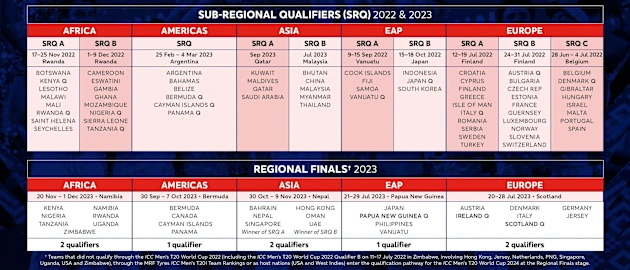
There are several steps on the way to the ICC Men’s T20 World Cup, and each one leads to the final qualifier. The ICC Men’s T20 World Cup Qualifier Standings are affected by how well teams do at every step of this process. The ICC makes sure that everyone from across the world has a fair chance to qualify by holding regional events.
Teams from Africa, Europe, Asia, East Asia-Pacific, and the Americas compete in regional qualifiers. The best teams from each region move on to the Global Qualifier, where the last spots in the World Cup are selected. Points, wins, losses, ties, and net run rate are used to figure out the standings at every stage.
The ICC Men’s T20 World Cup Qualifier Standings are important since they are clear. Teams know exactly what they need to do to move on, and spectators can follow the qualification scenarios match by match. This organized system has made associate nations more competitive and spread cricket’s reach around the world.
Teams Taking Part in the ICC Men’s T20 World Cup Qualifiers

The ICC Men’s T20 World Cup Qualifier Standings show a wide range of teams from all across the world of cricket. Some of these teams are seasoned associate teams, while others are new nations who want to build a name for themselves. The full squads change from tournament to tournament, however the basic teams who are usually involved in the most recent qualification round are:
India (already qualified as a full member host or top-ranked team), Pakistan, Sri Lanka, Bangladesh, Afghanistan, and other full members may skip the early rounds. Nepal, Oman, the United Arab Emirates, Scotland, Ireland, the Netherlands, Zimbabwe, Namibia, Uganda, Kenya, Hong Kong, Malaysia, Papua New Guinea, Canada, the United States, Bermuda, Italy, Germany, Spain, Denmark, Jersey, Guernsey, Nigeria, Tanzania, Rwanda, Bahrain, Kuwait, Qatar, Saudi Arabia, Japan, South Korea, the Philippines, Vanuatu, Fiji, Samoa, and Argentina are all teams that are competing in qualifiers.
The ICC Men’s T20 World Cup Qualifier Standings show how deep and competitive each of these teams is. This makes every regional event thrilling and unpredictable.
Important Players on All Qualifier Teams

One of the most interesting things about the ICC Men’s T20 World Cup Qualifier Standings is that players from countries who don’t usually play cricket are standing out. Because they play well in high-pressure games, these athletes typically become the topic of the world.
Players from Nepal, like Rohit Paudel, Dipendra Singh Airee, and Sandeep Lamichhane, add style and expertise. Oman depends on Bilal Khan, Aqib Ilyas, and Zeeshan Maqsood. Muhammad Waseem, Vriitya Aravind, and Zahoor Khan are all from the United Arab Emirates. Richie Berrington, George Munsey, and Safyaan Sharif are what makes Scotland strong. Paul Stirling, Andrew Balbirnie, and Josh Little are the driving forces behind Ireland. Max O’Dowd, Bas de Leede, and Logan van Beek are very important to the Netherlands.
African qualifiers show off players like Gerhard Erasmus and David Wiese from Namibia, Sikandar Raza and Blessing Muzarabani from Zimbabwe, and Riazat Ali Shah and Bilal Samad from Uganda. The United States has Monank Patel, Aaron Jones, and Ali Khan, while Canada has Navneet Dhaliwal and Saad Bin Zafar.
The Asian and East Asia-Pacific areas add players like Kinchit Shah from Hong Kong, Virandeep Singh from Malaysia, Assad Vala from Papua New Guinea, and Sandeep Singh from Bahrain. All of these players have an impact on the outcomes, which in the end affect the ICC Men’s T20 World Cup Qualifier Standings.
How the Points System and Ranking Work
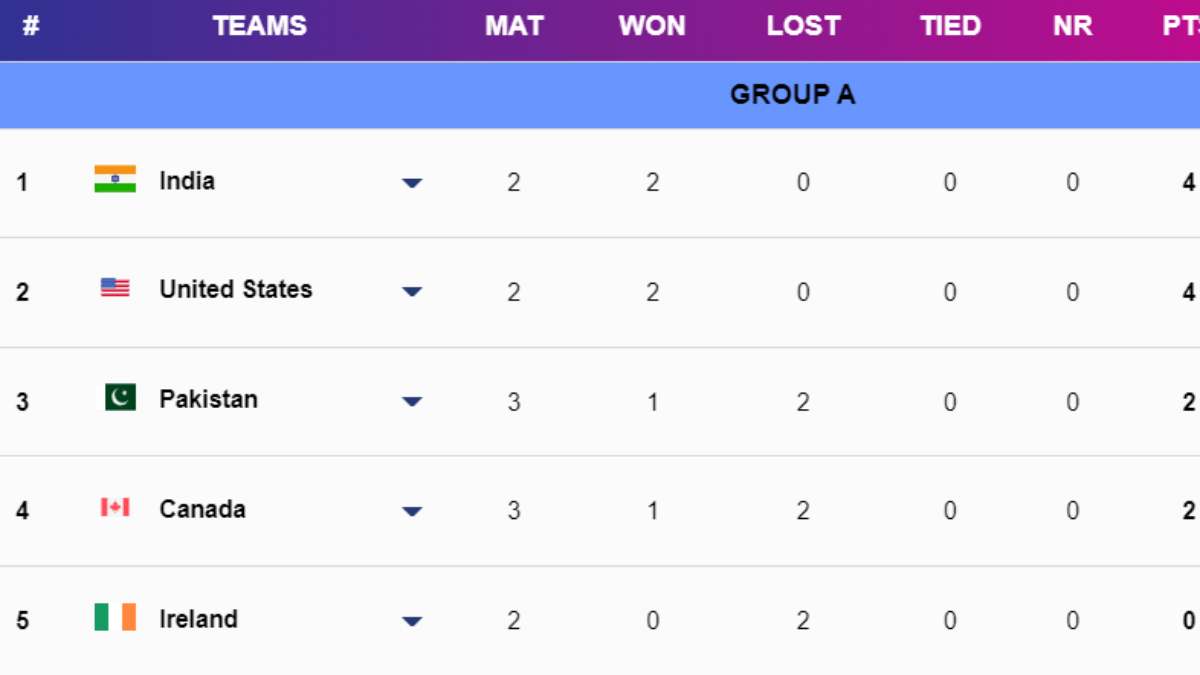
To understand how teams go up or down in the ICC Men’s T20 World Cup Qualifier Standings, you need to know how the points system works. Usually, a team gets two points for winning, one point for a draw or no result, and zero points for losing. Net run rate is the most important thing when groups are very close.
Every over is important since the standings change after each match. A single bad loss can hurt a team’s net run rate a lot, yet a big win can help them qualify. This changing method makes sure that teams stay competitive until the last group match.
The ICC also stresses fair play, good playing conditions, and rules that are the same for all qualifier tournaments to keep things consistent. Because of this, most people think that the ICC Men’s T20 World Cup Qualifier Standings are a good way to show how well a team is doing and how ready they are for the World Cup.
Table of Global Qualifier Standings (for example)
| Rank | Team | Matches | Wins | Losses | Points | Net Run Rate |
|---|---|---|---|---|---|---|
| 1 | Scotland | 6 | 5 | 1 | 10 | +1.45 |
| 2 | Oman | 6 | 4 | 2 | 8 | +0.88 |
| 3 | Namibia | 6 | 4 | 2 | 8 | +0.42 |
| 4 | Nepal | 6 | 3 | 3 | 6 | +0.10 |
| 5 | UAE | 6 | 2 | 4 | 4 | -0.35 |
| 6 | Canada | 6 | 0 | 6 | 0 | -2.10 |
This kind of table is very important for understanding the ICC Men’s T20 World Cup Qualifier Standings since it demonstrates how close qualification battles may be.
Overview of Regional Qualification
The ICC Men’s T20 World Cup Qualifier Standings are based on regional competitions. Each region has its own style of play and competitive personality, which makes it hard for teams to win. African qualifiers frequently focus on speed and athletic fielding. European qualifiers focus on tactical awareness and the capacity to change. Asian qualifiers are regarded for having good spin and skilled batting.
The Americas and East Asia-Pacific areas each have their own problems, such as how pitches behave and how much travel is needed. To do well in these events, you need to have a lot of depth in your squad and good leadership. Teams that can change swiftly typically move up the ICC Men’s T20 World Cup Qualifier Standings faster than they thought they would.
New Trends in the Qualifier Standings
The most recent ICC Men’s T20 World Cup Qualifier Standings show a number of patterns. Countries who are not full members are putting more money into their own structures, coaching, and fitness. The gap between full members and associates has been less since data analysis and match preparation have gotten better.
Batters are getting better at hitting, and bowlers are learning new abilities that are useful in T20 formats. These patterns make qualification matchups more exciting and unpredictable, which raises the overall quality shown in the rankings.
Why Qualification is Important for Associate Nations
For a lot of countries, moving up the ICC Men’s T20 World Cup Qualifier Standings means more than just getting in. It gives you more money, more exposure, and more chances to play against the best teams in the world. Players get professional contracts, and cricket boards get more respect in their own countries.
Getting to the World Cup can influence the course of cricket in a country that is not a full member. This is why everyone takes the ICC Men’s T20 World Cup Qualifier Standings very seriously and with great pride.
Important Things That Determine Standings Positions
The ICC Men’s T20 World Cup Qualifier Standings are only affected by five important things:
- Team balance between having a lot of batters and a lot of bowlers
- How all-rounders do when the pressure is on
- How often top-order batters are consistent
- How well death-over bowling works
- Standards for fielding and knowing what’s going on in the game
These things typically make the difference between teams that are good enough and those that just miss out.
Comparing how well the regional qualifiers did
| Region | Teams Competing | Qualification Spots | Competitive Intensity |
|---|---|---|---|
| Africa | 10 | 2 | Very High |
| Europe | 12 | 2 | High |
| Asia | 15 | 2 | Very High |
| Americas | 6 | 1 | Medium |
| EAP | 8 | 1 | High |
This comparison shows why the ICC Men’s T20 World Cup Qualifier Standings are so different in different parts of the world and why some roads to qualifying are harder than others.
What the Future Holds for the ICC Men’s T20 World Cup Qualifier Standings
The ICC Men’s T20 World Cup Qualifier Standings are likely to get even more competitive in the future. More teams will think they have a good chance of qualifying if the World Cups get bigger and the ICC gives them more help. This hope leads to greater planning and stronger performances.
Younger players are getting into international teams sooner, and the quality of coaching is getting better all the time. Because of this, new teams may come into the global spotlight in the future, making international T20 cricket even more diverse.
In conclusion
The ICC Men’s T20 World Cup Qualifier Standings are the most important part of cricket growth around the world. They show the hopes of associate nations, the hard work of players, and the strategic planning of cricket boards all across the world. These standings make guarantee that the best teams get to play in the World Cup by using a fair and organized system.
The ICC Men’s T20 World Cup Qualifier Standings are still the best way to judge growth, competition, and opportunity in modern T20 cricket as fans follow the trip via regional tournaments and global qualifiers.
Read More:- Mumbai Indians vs Gujarat Titans Match Scorecard – IPL 2025 Complete Analysis

