

Introduction
Cricket matches between India and South Africa have always attracted attention because both teams feature talented batters, experienced bowlers and outstanding all-rounders. Their encounters across Test matches, One Day Internationals and T20 Internationals regularly provide exciting moments for cricket supporters. Both nations have developed strong cricketing traditions and are known for producing players capable of changing a match through individual performances.
The South Africa national cricket team vs India national cricket team match scorecard provides an opportunity to understand how these teams perform against each other. It includes important information about batting contributions, bowling performances, partnerships, wickets and the final result. One memorable recent meeting took place during the ICC Men’s T20 World Cup 2026 Super Eight stage on February 22, 2026, at Narendra Modi Stadium in Ahmedabad. South Africa delivered an impressive performance and defeated India by 76 runs.
Match Overview: India vs South Africa
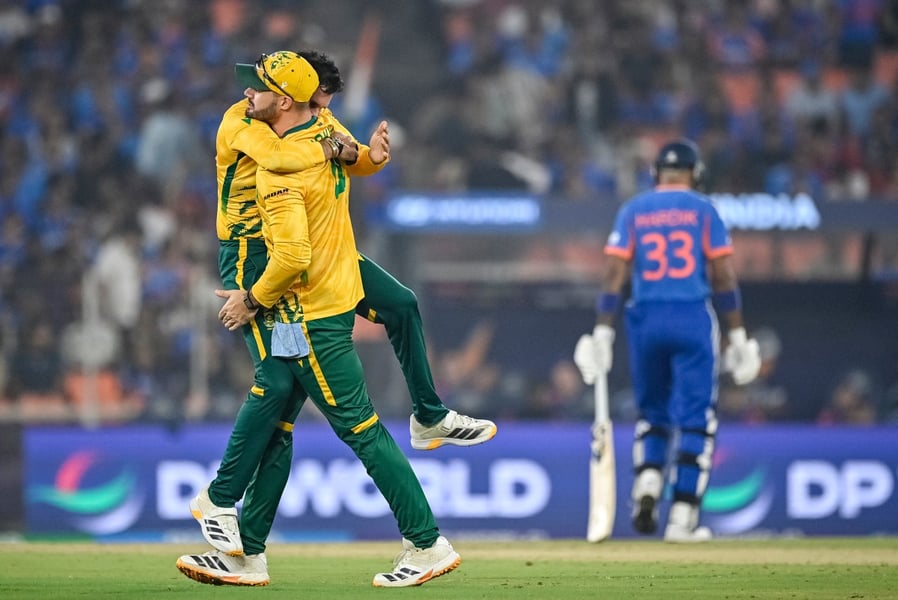
The Super Eight encounter between India and South Africa was an important fixture in the 2026 T20 World Cup. Both teams entered the contest with strong expectations, but South Africa demonstrated excellent control with both bat and ball. After winning the toss, South Africa elected to bat first and eventually established a competitive total of 187 runs for seven wickets in 20 overs.
India faced a challenging target of 188 runs. However, the Indian batting lineup struggled against South Africa’s disciplined bowling attack and was dismissed for 111 runs in 18.5 overs. The result highlighted the importance of partnerships, bowling variations and maintaining pressure throughout a T20 match.
Match details:
- Tournament: ICC Men’s T20 World Cup 2026
- Match: Super Eight, Group 1
- Date: February 22, 2026
- Venue: Narendra Modi Stadium, Ahmedabad
- South Africa: 187/7 in 20 overs
- India: 111 all out in 18.5 overs
- Result: South Africa won by 76 runs
- Player of the Match: David Miller
South Africa National Cricket Team vs India National Cricket Team Match Scorecard
The scorecard explains the performances that shaped this exciting contest. South Africa recovered from an early batting collapse through valuable contributions from David Miller, Dewald Brevis and Tristan Stubbs. India, meanwhile, found it difficult to build partnerships during the chase.
South Africa Batting Scorecard
| Batter | Runs | Balls |
|---|---|---|
| Aiden Markram | 4 | 7 |
| Quinton de Kock | 6 | 7 |
| Ryan Rickelton | 7 | 7 |
| Dewald Brevis | 45 | 29 |
| David Miller | 63 | 35 |
| Tristan Stubbs | 44* | 24 |
| Total | 187/7 | 20 overs |
David Miller was the leading scorer with 63 runs from 35 deliveries. Dewald Brevis contributed 45 runs, while Tristan Stubbs remained unbeaten on 44 from 24 balls. Their contributions helped South Africa recover after losing three early wickets.
India Batting Scorecard
| Batter | Runs | Balls |
|---|---|---|
| Ishan Kishan | 0 | 4 |
| Abhishek Sharma | 15 | 12 |
| Tilak Varma | 1 | 2 |
| Suryakumar Yadav | 18 | 22 |
| Washington Sundar | 11 | 11 |
| Shivam Dube | 42 | 37 |
| Hardik Pandya | 18 | 17 |
| Rinku Singh | 0 | 2 |
| Arshdeep Singh | 1 | 2 |
| Varun Chakaravarthy | 0* | 3 |
| Jasprit Bumrah | 0 | 1 |
| Total | 111 all out | 18.5 overs |
Shivam Dube was India’s highest scorer with 42 runs from 37 deliveries. Suryakumar Yadav and Hardik Pandya also made contributions, but India could not establish the partnerships required to chase the target.
South Africa’s First Innings: A Strong Recovery
South Africa did not enjoy a comfortable beginning with the bat. India’s fast bowlers created early pressure and removed important batters during the opening overs. Aiden Markram, Quinton de Kock and Ryan Rickelton departed cheaply, leaving South Africa struggling at 20 for three wickets.
At that stage, the team needed a partnership that could rebuild the innings without losing its attacking approach. David Miller took responsibility and began playing positive cricket. Dewald Brevis supported him with aggressive stroke-making, especially when the Indian spinners attempted to control the scoring rate.
The partnership between Miller and Brevis became a turning point. Both batters rotated the strike effectively and punished loose deliveries. Their partnership added 97 runs and changed the direction of the innings. Miller’s experience helped him select the right opportunities, while Brevis provided attacking momentum.
David Miller’s Match-Winning Batting Performance
David Miller delivered one of the most important performances of the match. His innings of 63 runs from 35 balls included seven boundaries and three sixes. He showed excellent timing and confidence against both pace and spin bowling.
Miller understood that South Africa needed to recover after losing early wickets. Instead of becoming defensive, he focused on finding gaps and taking advantage of scoring opportunities. His ability to rotate the strike allowed him to maintain pressure on India’s bowlers.
His partnership with Brevis helped South Africa rebuild the innings, while his aggressive approach increased the scoring rate during the middle overs. Miller’s performance earned him the Player of the Match award and played a major role in South Africa’s victory.
Dewald Brevis and Tristan Stubbs Provide Support
Dewald Brevis played an important supporting role during South Africa’s recovery. His 45 runs from 29 deliveries included three fours and three sixes. He combined attacking intent with sensible shot selection and ensured that the Indian bowlers could not dominate the middle overs.
Tristan Stubbs also contributed significantly towards the end of the innings. His unbeaten 44 from just 24 balls helped South Africa finish strongly. Stubbs accelerated the scoring rate through powerful shots and effective placement, adding valuable runs during the final overs.
These performances demonstrated the importance of middle-order depth in T20 cricket. Even after losing early wickets, South Africa had enough batting strength to reach 187/7, creating a challenging target for India.
India’s Bowling Performance
India started the match with an encouraging bowling performance. Jasprit Bumrah removed important South African batters and created early pressure. Arshdeep Singh also contributed with a wicket, helping India restrict the opposition during the opening phase.
However, the middle overs proved difficult for the Indian bowling unit. David Miller and Dewald Brevis attacked the spinners and prevented India from controlling the scoring rate. Although India managed to take additional wickets, South Africa continued finding boundaries.
Bumrah finished with two wickets, while Arshdeep Singh and Shivam Dube also picked up wickets. The bowling performance showed that early breakthroughs alone are not always enough in T20 cricket. Teams must maintain pressure throughout the innings to prevent opposition batters from recovering.
India’s Second Innings: The Chase Falls Apart
India required 188 runs to win, but the chase started poorly. Ishan Kishan was dismissed for a duck, and the team lost early wickets before establishing a reliable opening partnership. The South African bowlers immediately took advantage of the situation.
Marco Jansen was particularly effective with his variations and accurate bowling. He removed important Indian batters and continued creating pressure throughout the innings. Corbin Bosch and Keshav Maharaj also contributed with crucial wickets.
India struggled to maintain a consistent scoring rate. The middle order could not build the partnerships needed to bring the required run rate under control. As wickets continued falling, the target became increasingly difficult to achieve.
Shivam Dube’s Important Contribution
Shivam Dube was India’s highest scorer, finishing with 42 runs from 37 deliveries. His innings included one four and three sixes. Although his contribution provided some resistance, the team had already lost several important wickets.
Dube attempted to rebuild the innings and keep India’s hopes alive. He played some powerful shots and tried to maintain the scoring rate despite regular dismissals at the other end.
However, South Africa maintained excellent discipline with the ball. Marco Jansen eventually dismissed Dube, ending India’s strongest batting contribution. His innings was one of the few positives for India in an otherwise difficult chase.
South Africa’s Bowling Performance
South Africa’s bowling attack played a decisive role in securing the victory. Marco Jansen was the leading wicket-taker, finishing with four wickets for 22 runs in 3.5 overs. His performance demonstrated excellent control over line, length and pace variations.
Keshav Maharaj also delivered an important contribution, taking three wickets for 24 runs in three overs. Corbin Bosch claimed two wickets for 12 runs, while Aiden Markram picked up one wicket.
Lungi Ngidi maintained control during his four overs and conceded only 15 runs. The combined bowling effort prevented India from building partnerships and ensured that the opposition remained under pressure throughout the chase.
Key Moments That Decided the Match

Several important moments influenced the outcome of this contest. India’s early wickets initially suggested that South Africa might struggle to establish a competitive total. However, Miller and Brevis changed the situation through their valuable partnership.
Another important moment came during the final overs of South Africa’s innings. Tristan Stubbs accelerated the scoring and helped his team reach 187 runs. This gave the bowlers a strong total to defend.
India’s poor start during the chase became another major turning point. Losing wickets during the Powerplay prevented the team from establishing momentum. South Africa continued taking wickets and eventually dismissed India for 111 runs.
Head-to-Head Rivalry Between India and South Africa
India and South Africa share a competitive international cricket rivalry. Their matches are played across different formats, and both teams have produced memorable performances over the years.
India has traditionally been known for its strong batting depth and spin bowling, while South Africa has developed a reputation for powerful fast bowling and aggressive middle-order batting. These contrasting strengths make their encounters interesting for supporters.
The South Africa national cricket team vs India national cricket team match scorecard is useful for comparing individual performances and understanding how the balance between batting and bowling influences match results.
Importance of Match Scorecards in Cricket
A cricket scorecard provides more than just the final result. It allows supporters to understand the complete structure of a match, including individual batting scores, bowling figures, extras, partnerships and fall of wickets.
For analysts, scorecards help identify patterns in team performance. A batter’s strike rate can indicate scoring speed, while a bowler’s economy rate helps explain how effectively runs were controlled.
Supporters can also use scorecards to compare players across different formats. This information makes it easier to understand the impact of individual performances and identify the players who influenced the final result.
Conclusion
The February 22, 2026, Super Eight match between India and South Africa demonstrated the importance of partnerships, attacking batting and disciplined bowling. South Africa recovered from an early batting collapse through David Miller, Dewald Brevis and Tristan Stubbs before establishing a total of 187/7.
India struggled during the chase and was dismissed for 111 runs in 18.5 overs. Marco Jansen’s four-wicket performance and David Miller’s impressive batting helped South Africa secure a convincing 76-run victory.
Overall, the South Africa national cricket team vs India national cricket team match scorecard highlights how individual performances and collective teamwork can determine the outcome of an important international cricket match. It remains a useful reference for cricket fans interested in understanding the match’s key contributions and memorable moments.

