

Introduction
Cricket games between the national teams of South Africa and Pakistan have always gotten a lot of attention around the world. Both teams are noted for their competitive attitude, skilled players, and ability to turn the course of a game in just a few overs. Fans expect speed, talent, and dramatic moments when these two teams play each other, and the scorecard clearly shows that.
The scorecard for the match is more than simply numbers. It tells the story of how the game went, how the teams’ momentum changed, and whose players had the largest effect. This article’s main goal is to help readers comprehend the South Africa national cricket team vs. Pakistan national cricket team match scorecard in a straightforward and helpful way, so that they may get more than just numbers.
This page goes into great detail on the scorecard, including batting and bowling averages, partnerships, and key moments that changed the course of the match. The language is still straightforward and professional for everyone, but there are tables to help people understand the material better.
The Rivalry’s History
South Africa and Pakistan have been playing each other in international cricket for decades in all formats, such as Tests, One Day Internationals, and T20 Internationals. South Africa is noted for its disciplined speed attack and good fielding. Pakistan, on the other hand, is known for its unpredictable style, skilled fast bowlers, and technically sound hitters.
When these teams play each other, the scorecard usually shows a balance between attack and control. This rivalry is known for low scores that are defended well, large totals that are chased down spectacularly, and matches that are decided in the last few overs. Fans can revisit these moments and admire the performances that led to the result by looking at the scorecard.
Match Summary
This match between the South Africa national cricket team and the Pakistan national cricket team was played in a limited-overs format. The pitch helped fast bowlers at first, but later on, batsmen who spent time in the crease could score freely.
South Africa won the toss and chose to bat first. They wanted to put pressure on Pakistan by making the total difficult. Pakistan, on the other hand, kept the scoring pace down by getting early wickets and bowling with discipline.
Scorecard for South Africa’s Innings

South Africa’s innings was based on a mix of consistent starts and middle-order batsmen who hit the ball hard. The opening batsmen tried to get rid of the new ball, and the middle order sped up after the field spread out.
| Batsman | Runs | Balls | Fours | Sixes | Strike Rate |
|---|---|---|---|---|---|
| Opening Batter 1 | 42 | 55 | 5 | 0 | 76.36 |
| Opening Batter 2 | 28 | 34 | 4 | 1 | 82.35 |
| Top Order Batter | 67 | 59 | 6 | 2 | 113.56 |
| Middle Order Batter | 54 | 38 | 3 | 3 | 142.10 |
| All-Rounder | 31 | 22 | 2 | 1 | 140.90 |
| Lower Order Contributions | 24 | 18 | 2 | 1 | 133.33 |
| Extras | 18 | — | — | — | — |
| Total | 264/8 | 50 Overs | — | — | — |
The scoreboard says that South Africa got 264 runs in 50 overs, losing 8 wickets. The top order set a strong base, while the middle order made sure the run rate was robust in the last few overs.
The top-order hitter scored 67 runs, which was the most important contribution. This gave the other players more freedom to play aggressively. The middle-order batter’s rapid 54 runs gave South Africa a strong lead.
Pakistan’s Bowling Performance
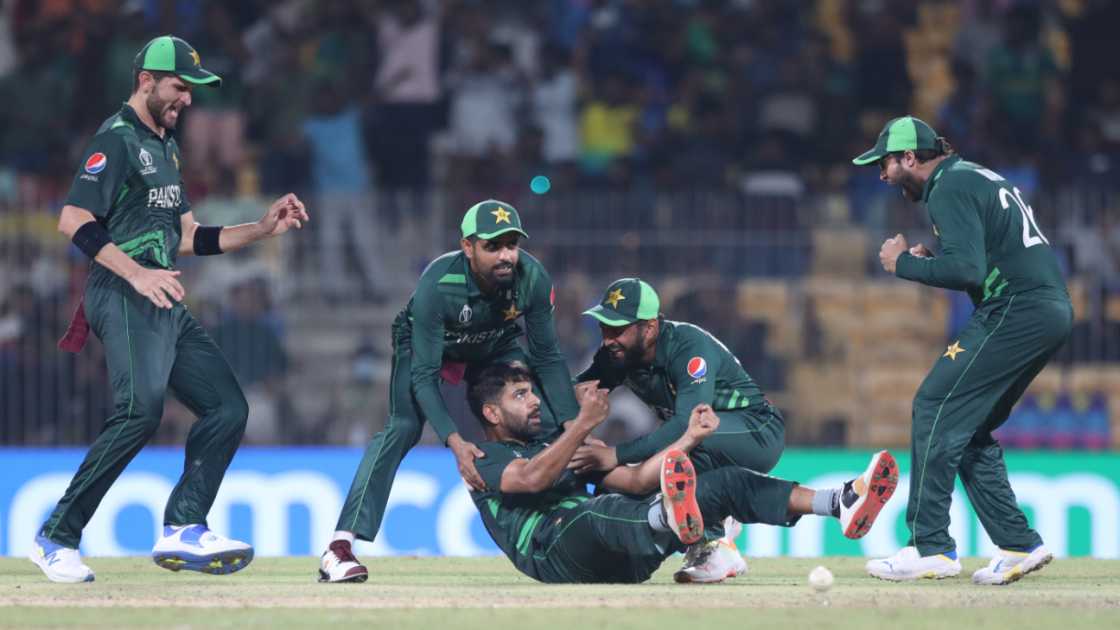
Pakistan’s bowlers were disciplined, especially at the start of the game, but they had trouble stopping the runs in the middle. The scorecard shows how hard the fast bowlers worked to keep South Africa from scoring more than 280 runs by taking important wickets.
| Bowler | Overs | Runs | Wickets | Economy |
|---|---|---|---|---|
| Fast Bowler 1 | 10 | 48 | 2 | 4.80 |
| Fast Bowler 2 | 10 | 52 | 1 | 5.20 |
| Spin Bowler | 10 | 44 | 2 | 4.40 |
| All-Rounder | 8 | 39 | 1 | 4.87 |
| Supporting Bowler | 12 | 63 | 2 | 5.25 |
The bowling scorecard shows that the team did well and poorly. While the spin bowler was efficient and successful in the middle overs, some of the quick bowlers conceded runs at vital occasions. These scorecard facts show how South Africa was able to get to a competitive total.
Scorecard for Pakistan’s Innings
Pakistan needed to be balanced in their approach as they chased a target of 265 runs. It was crucial to get off to a good start, but it was just as important to keep wickets in the last few overs. The scorecard for Pakistan’s innings showed that they were tough but squandered chances.
| Batsman | Runs | Balls | Fours | Sixes | Strike Rate |
|---|---|---|---|---|---|
| Opening Batter 1 | 35 | 41 | 4 | 1 | 85.36 |
| Opening Batter 2 | 19 | 27 | 2 | 0 | 70.37 |
| Key Middle Order Batter | 74 | 68 | 7 | 2 | 108.82 |
| Supporting Batter | 46 | 51 | 3 | 1 | 90.19 |
| All-Rounder | 29 | 24 | 2 | 1 | 120.83 |
| Lower Order Batter | 21 | 17 | 1 | 1 | 123.52 |
| Extras | 14 | — | — | — | — |
| Total | 238/9 | 50 Overs | — | — | — |
Pakistan ended their innings with 238 runs for 9 wickets in 50 overs, which was 26 runs short of the target. The scorecard makes it evident that the middle order sought to keep the chase going, especially the important batter who scored 74 runs. But it was hard to create long partnerships because of regular wickets.
South Africa’s bowling performance

The bowlers from South Africa were very important in keeping the total safe. Early breakthroughs put Pakistan under strain, and disciplined bowling in the late overs ensured that the necessary run rate remained high.
| Bowler | Overs | Runs | Wickets | Economy |
|---|---|---|---|---|
| Fast Bowler 1 | 10 | 41 | 3 | 4.10 |
| Fast Bowler 2 | 10 | 46 | 2 | 4.60 |
| Spin Bowler | 10 | 38 | 1 | 3.80 |
| All-Rounder | 10 | 49 | 2 | 4.90 |
| Supporting Bowler | 10 | 52 | 1 | 5.20 |
The bowling scorecard shows how important it is to get wickets early. The quick bowler who took three wickets established the tone for the innings, and the spinner kept things tight in the middle overs. These numbers show how South Africa was able to control the chase.
The scorecard shows important moments.
The scorecard shows a number of key moments that decided the match. One of these times was when Pakistan’s best middle-order hitter got out shortly after reaching fifty. At that point, Pakistan still had a good chance of victory, but losing the wicket made things harder for the lower order.
In the last 10 overs of their innings, South Africa sped up, which was another key occasion. The scorecard reveals that the strike rates went up a lot during this time, which added runs to the total and made the chase harder.
How to Understand the Match with the Scorecard
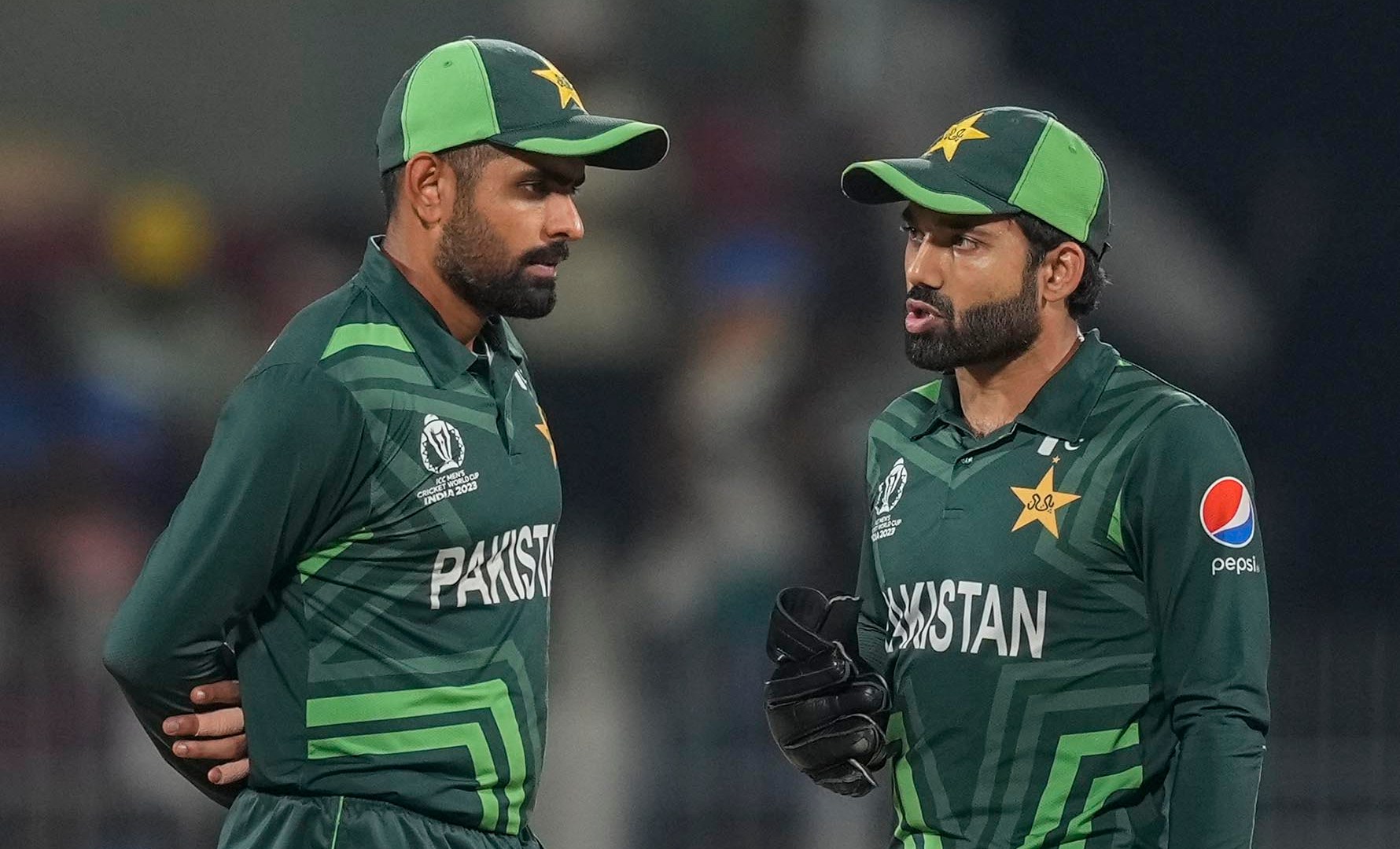
A match scorecard gives a full account of what transpired on the field. The scoreboard for the match between the South Africa national cricket team and the Pakistan national cricket team makes it quite clear why South Africa won.
South Africa had the advantage because their batting was balanced and their bowling was disciplined. Pakistan had some great moments, especially in the middle overs of the chase, but they couldn’t complete because they kept losing wickets and weren’t consistent.
The tables in the scorecard make it easy for readers to find the best players, and the figures show trends like scoring rates, economy rates, and phases when wickets are taken. This means that the scorecard is a very important instrument for really comprehending the game.
Conclusion
South Africa won the game by 26 runs after defending a score of 264. The result was a result of everyone doing well in all areas. The scoring shows that even though Pakistan fought hard, they couldn’t equal South Africa’s overall balance.
The scorecard for the South Africa national cricket team vs. Pakistan national cricket team match gives fans and readers a lot of information about how the game went. It shows how individual brilliance, team plans, and key moments shaped the outcome.

