

Introduction
The Indian Premier League continued its remarkable journey in 2026, delivering another exciting season of competitive cricket, outstanding individual performances, and unforgettable moments. As one of the world’s most popular Twenty20 cricket competitions, the tournament brought together international superstars and promising Indian players. Cricket enthusiasts witnessed powerful batting displays, intelligent bowling strategies, dramatic finishes, and impressive teamwork throughout the competition.
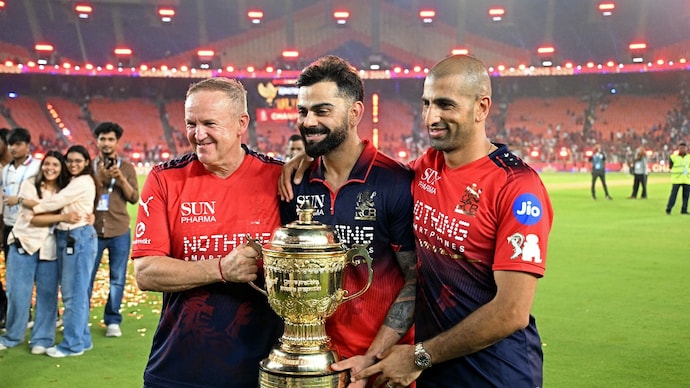
The IPL 2026 season took place from March 28 to May 31, featuring ten franchises competing for the prestigious championship trophy. Royal Challengers Bengaluru emerged victorious after defeating Gujarat Titans in the final, successfully defending their title from the previous season. This achievement represented an important milestone in the franchise’s history and demonstrated the value of consistent performances under pressure. The tournament also highlighted the emergence of young cricketing talent, with several players establishing themselves as future stars. Beyond the results, the season reinforced the competition’s reputation for entertainment, sporting excellence, and exciting opportunities for developing cricketers.
The Indian Premier League follows a competitive Twenty20 format designed to provide exciting matches while maintaining opportunities for teams to recover from difficult starts. Each franchise attempts to establish a strong position during the league stage before advancing toward the knockout rounds. Consistency, squad depth, tactical flexibility, and the ability to perform under pressure are essential qualities for successful teams.
The 2026 competition included ten franchises and a scheduled total of 74 matches, including the playoffs. Each team participated in 14 league fixtures, with the leading four sides advancing to the playoff stage. The top two teams received an additional opportunity to reach the final through the qualifying system, while the third- and fourth-placed sides competed in the Eliminator.
This structure encouraged competitive performances throughout the tournament because every victory influenced playoff qualification. Net run rate also played an important role when teams finished with equal points. Consequently, franchises needed to balance aggressive cricket with sensible decision-making, particularly during close matches and challenging run chases.
Participating Teams and Their Competitive Strengths
The tournament featured ten established franchises representing different regions of India. Each team entered the competition with its own combination of experienced international cricketers, domestic specialists, emerging players, and tactical approaches. The diversity of playing styles contributed significantly to the excitement surrounding the championship.
Mumbai Indians and Chennai Super Kings brought their extensive championship histories, while Kolkata Knight Riders entered with a reputation for aggressive cricket and adaptable team combinations. Rajasthan Royals continued to emphasize developing young talent, whereas Sunrisers Hyderabad remained associated with attacking batting performances.
Royal Challengers Bengaluru entered as defending champions and demonstrated their ability to maintain competitive standards. Gujarat Titans relied on a balanced squad, disciplined bowling, and dependable batting contributions. Punjab Kings, Delhi Capitals, and Lucknow Super Giants also possessed talented players capable of changing matches through individual brilliance.
The differences between these franchises created interesting tactical contests. Some teams preferred attacking during the powerplay, while others relied on strong middle-over performances and experienced finishers. Ultimately, effective coordination between batting, bowling, and fielding departments remained essential for achieving consistent results.
League Stage Results and Points Table Overview
The league stage produced a competitive race for the playoff positions. Royal Challengers Bengaluru, Gujarat Titans, and Sunrisers Hyderabad each completed their 14 matches with nine victories, collecting 18 points. Rajasthan Royals secured the remaining playoff position with eight wins and 16 points.
Royal Challengers Bengaluru finished at the top of the standings because of their superior net run rate, followed by Gujarat Titans and Sunrisers Hyderabad. Rajasthan Royals occupied fourth place, demonstrating the importance of winning crucial matches during the closing stages of the league.
Punjab Kings narrowly missed qualification after collecting 15 points, while Delhi Capitals finished with 14. Kolkata Knight Riders and Chennai Super Kings experienced inconsistent campaigns, and Mumbai Indians and Lucknow Super Giants finished near the bottom.
The IPL 2026 standings illustrated how small differences in performance can determine a franchise’s entire season. A single successful run chase, economical bowling spell, or narrow victory can influence qualification. Teams that consistently protected competitive totals and maintained positive net run rates gained a valuable advantage as the tournament approached its decisive stage.
The playoff stage delivered several important performances as the four qualified franchises competed for a place in the championship match. Royal Challengers Bengaluru faced Gujarat Titans in the first qualifier and produced an outstanding display, scoring 254 runs for five wickets before dismissing Gujarat for 162. The convincing 92-run victory secured Bengaluru’s place in the final.
Rajasthan Royals then defeated Sunrisers Hyderabad in the Eliminator. Rajasthan scored an impressive 243 for eight, while Hyderabad were dismissed for 196, resulting in a 47-run victory. The match demonstrated Rajasthan’s aggressive batting approach and ability to perform during high-pressure situations.
Gujarat Titans recovered from their earlier defeat by overcoming Rajasthan Royals in the second qualifier. Chasing Rajasthan’s 214 for six, Gujarat reached 219 for three and secured a seven-wicket victory.
These results established a final between Royal Challengers Bengaluru and Gujarat Titans. Both teams had demonstrated their strengths during the competition, creating considerable anticipation for the championship encounter. The playoff results also showed that teams needed more than individual talent to succeed, as collective execution and tactical preparation became increasingly important.
The championship final took place on May 31 at Narendra Modi Stadium in Ahmedabad. Royal Challengers Bengaluru captain Rajat Patidar won the toss and elected to bowl first, placing immediate responsibility on his bowling attack to restrict Gujarat Titans.
Gujarat struggled to build substantial partnerships after losing important early wickets. Shubman Gill and Sai Sudharsan departed cheaply, increasing the pressure on the middle order. Washington Sundar provided valuable resistance with an unbeaten 50 from 37 deliveries, helping Gujarat reach 155 for eight in their allotted 20 overs.
Bengaluru’s bowling attack maintained control through disciplined variations and consistent wicket-taking. Rasikh Salam claimed three wickets, while Josh Hazlewood and Bhuvneshwar Kumar contributed two wickets each.
During the chase, Virat Kohli delivered an exceptional unbeaten innings of 75 from 42 balls. Venkatesh Iyer added a rapid 32 from 16 deliveries, providing early momentum. Bengaluru reached 161 for five in 18 overs, winning by five wickets and claiming their second consecutive championship. Kohli received the Player of the Match award for his decisive contribution.
Royal Challengers Bengaluru’s success represented one of the most significant achievements in the franchise’s history. After winning their first championship in 2025, the team returned in 2026 determined to demonstrate that its previous success was not an isolated achievement. Defending a title requires considerable discipline because opponents prepare carefully against established champions.
The franchise displayed an effective combination of experienced leadership, dependable batting, and a bowling attack capable of responding to different match situations. Captain Rajat Patidar played an important role in guiding the team, while Virat Kohli continued to provide valuable contributions through his experience and technical ability.
Bengaluru became only the third franchise to win consecutive IPL championships, joining Mumbai Indians and Chennai Super Kings in achieving that distinction.
The achievement highlighted the importance of maintaining a balanced squad rather than relying entirely on individual superstars. Players contributed in different situations, allowing the franchise to remain competitive even when particular matches became challenging. The consecutive titles also strengthened Bengaluru’s position among the league’s successful franchises.
Outstanding Batting Performances and Orange Cap Winner
Batting remained a major attraction throughout the tournament, with several players producing impressive run-scoring performances. Modern Twenty20 cricket places considerable importance on maintaining a high scoring rate without sacrificing consistency. Successful batters must adapt to different bowling styles, pitch conditions, and match situations.
Vaibhav Sooryavanshi of Rajasthan Royals emerged as the leading run-scorer, collecting 776 runs and winning the Orange Cap. His remarkable performances highlighted the growing influence of young Indian cricketers in the competition. Shubman Gill followed with 732 runs, while Sai Sudharsan accumulated 722.
Virat Kohli also enjoyed a productive campaign, scoring 675 runs and making a crucial contribution during the championship final. Heinrich Klaasen completed the leading group with 624 runs.
These performances demonstrated that successful batting requires more than powerful boundary hitting. Strike rotation, understanding field placements, building partnerships, and selecting appropriate attacking opportunities are equally important. The leading run-scorers combined technical ability with confidence and intelligent decision-making, creating memorable performances that influenced their teams’ results.
Although explosive batting frequently attracts attention, disciplined bowling remains essential for winning Twenty20 matches. Bowlers must operate under considerable pressure because batters continually search for scoring opportunities. Successful bowling performances often depend on accurate line and length, changes of pace, intelligent field placements, and the ability to execute plans during the final overs.
Kagiso Rabada of Gujarat Titans won the Purple Cap after taking 29 wickets. His performances helped Gujarat maintain a strong competitive position and progress to the championship final. Bhuvneshwar Kumar followed closely with 28 wickets, providing important contributions for Royal Challengers Bengaluru.
Jofra Archer also delivered impressive performances, collecting 25 wickets. Rashid Khan and Anshul Kamboj finished among the leading wicket-takers with 21 wickets each.
The IPL 2026 bowling statistics demonstrated the importance of balancing attacking deliveries with economical spells. Wickets can interrupt partnerships and reduce scoring momentum, while consistent dot balls create pressure that forces batters into risky decisions. Teams with reliable bowling combinations were better equipped to defend totals and control difficult match situations.
One of the most encouraging aspects of the Indian Premier League is its ability to provide young cricketers with opportunities to compete against established international professionals. Exposure to high-pressure situations helps developing players improve their technical skills, tactical understanding, and mental strength.
Vaibhav Sooryavanshi became a particularly important example during the 2026 season. In addition to winning the Orange Cap, he received recognition as the Most Valuable Player, Emerging Player, and Super Striker of the Season. These achievements demonstrated his extraordinary influence on the competition.
Young players benefit from sharing dressing rooms with experienced professionals who understand different conditions and match situations. Such interactions provide valuable lessons about preparation, fitness, decision-making, and adapting to demanding schedules.
The tournament also creates opportunities for domestic cricketers who may otherwise receive limited international attention. Strong performances can increase their visibility and potentially support future selection opportunities. As franchises continue investing in scouting and player development, emerging talent will remain an important part of the league’s long-term success.
Technology has become an important part of professional cricket, influencing how teams prepare for matches, evaluate performances, and develop tactical strategies. Modern franchises increasingly use video analysis, performance statistics, fitness monitoring, and detailed opposition research to support their decisions.
Batting analysts examine scoring patterns against different bowling variations, helping players identify opportunities and potential weaknesses. Bowling coaches study opposition batters to determine suitable lengths, field placements, and variations. Teams also evaluate ground dimensions, pitch characteristics, and weather conditions before selecting their playing combinations.
During IPL 2026, tactical adaptability remained particularly important because matches frequently required rapid decisions. Captains needed to determine when to introduce spin, how to manage bowling resources, and which batters were best suited to specific situations.
The Impact Player rule also added another dimension to squad planning, allowing teams to adjust their combinations during matches. However, technology and statistical analysis cannot replace individual skill, concentration, and experience. The strongest teams combine detailed preparation with the confidence to make effective decisions under pressure.
Fan Engagement and the Growing Popularity of the IPL
The Indian Premier League has developed into a major sporting event that attracts audiences from different countries and cultural backgrounds. Its combination of competitive cricket, regional franchise identities, and international players creates an environment that appeals to both dedicated cricket followers and casual viewers.
Supporters contribute significantly to the tournament’s atmosphere through stadium attendance, online discussions, fantasy cricket participation, and social media engagement. Rivalries between established franchises create additional excitement, particularly when matches involve closely contested finishes or important playoff implications.
Digital platforms have also transformed how supporters experience cricket. Fans can follow match statistics, review highlights, compare player performances, and participate in conversations while games are taking place.
The league’s popularity extends beyond entertainment. It creates commercial opportunities involving broadcasting, sponsorship, hospitality, tourism, and sports-related employment. Local businesses can benefit from increased activity surrounding major fixtures, while young cricket enthusiasts gain inspiration from watching professional players.
This combination of sporting competition and audience engagement continues to support the tournament’s position as a leading global cricket event.
Important Lessons From the 2026 Season
The completed season offered several valuable lessons about successful Twenty20 cricket. Perhaps the most important was that consistency throughout the league stage provides a foundation for championship success. Teams cannot depend entirely on occasional outstanding performances because qualification requires sustained results across numerous matches.
Royal Challengers Bengaluru demonstrated the importance of combining experienced players with effective team coordination. Gujarat Titans showed that recovering from difficult results is possible through resilience and improved execution. Rajasthan Royals highlighted the potential impact of emerging players, while Sunrisers Hyderabad illustrated the value of maintaining a competitive league-stage record.
Another important lesson involved adaptability. Teams faced different pitch conditions, opposition strategies, and pressure situations throughout the tournament. Successful franchises responded by adjusting their batting approaches, bowling combinations, and fielding plans.
The season also reinforced the importance of individual performances within a collective structure. A brilliant innings or decisive bowling spell can influence a match, but championships usually require contributions from multiple players across different stages of the competition.
Conclusion
The IPL 2026 season delivered an entertaining combination of competitive cricket, exceptional individual achievements, and memorable championship moments. Royal Challengers Bengaluru successfully defended their title by defeating Gujarat Titans in the final, establishing an important milestone in franchise history.
Virat Kohli’s match-winning performance, Vaibhav Sooryavanshi’s outstanding batting achievements, and Kagiso Rabada’s impressive wicket-taking record were among the defining highlights of the competition. The tournament also demonstrated the growing importance of young talent, advanced match preparation, and adaptable team strategies.
Beyond the championship result, the season strengthened the Indian Premier League’s reputation as a platform for sporting excellence and player development. Its combination of established international stars, emerging Indian cricketers, passionate supporters, and competitive franchises continues to make the league an important part of modern cricket.

